How to Make Real Neapolitan Pizza: It Comes Down to 90 Seconds
Most guides to Neapolitan pizza start with the dough. We are going to start somewhere else, because after supplying pizza bases to hundreds of kitchens in Thailand we know where it actually goes wrong.
It is not the flour. It is not the tomatoes. It is the ninety seconds.
The rule that defines the style
A true Neapolitan pizza bakes in 60 to 90 seconds at around 450–500°C. Everything you recognise about it comes from that:
- the cornicione — the puffed rim — rises because the water in the dough turns to steam faster than the crust can set
- the leopard spotting — those dark blisters — is sugar and protein browning in seconds
- the base stays soft enough to fold, because it was never in the oven long enough to dry
Take the same dough and bake it ten minutes at 250°C and none of that happens. You get a good pizza. You do not get a Neapolitan one. The difference is not effort or skill — it is physics.
Why your oven is the whole story
This is the uncomfortable part. A domestic oven maxes out around 250°C. So does most professional convection equipment. You are half the required temperature.
You cannot compensate with time: more minutes at lower heat dries the base instead of puffing the rim. You cannot compensate with a hotter grill element: the top burns while the bottom stays pale.
To bake Neapolitan you need an oven that reaches 450–500°C and a hot stone in contact with the base. The stone matters as much as the flame: it dumps heat into the dough in the first seconds, which is what lifts the crust before the toppings overcook. A metal tray cannot do it — it heats too slowly and holds too little.
The dough, honestly
Traditional Neapolitan dough is flour, water, salt, yeast — and time. Long fermentation, often 24 to 48 hours, at controlled temperature. That time is what makes it digestible and gives it flavour and the extensibility to stretch without tearing.
In a Thai kitchen this is where most projects die. Not because it is difficult in theory, but because it needs a proofing space with stable temperature in a climate that offers none, daily attention, and someone who can read the dough by touch. That person is a pizzaiolo, and if you have one you are not reading this article.
There is a second route, and there is nothing dishonest about it: use a base that has already been through that process. Our pizza bases are naturally fermented, proofed and par-baked in our bakery, then frozen. The fermentation is done. The structure is built. What is left is the part that is actually fun — the toppings and the bake.
The method, step by step
- Preheat properly. Lid closed, flame at maximum, until the stone is hot — not just the air. This is the step people rush, and it is the one that decides everything.
- Dress cold and dress light. Take the base straight from the freezer, no thawing. Two spoons of sauce, not four. Drain your mozzarella — at 500°C water is the enemy, and a wet pizza steams instead of baking.
- Launch confidently. Hesitation is how pizzas fold in half on the peel.
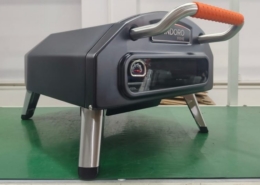
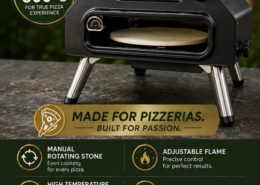
- Turn it — the stone, not the pizza. In a gas oven the flame sits on one side, so one edge cooks faster. In most ovens you fix this by going in with a peel: door open, lift, rotate, set down. On a rotating stone you turn a knob from outside and the pizza turns with it — two seconds, door closed, no heat lost, nothing to tear. A quarter-turn at 30 seconds and another at 60. This is the step that separates an even bake from a pizza that is burnt on one side and pale on the other, and it is the step that usually needs a trained hand. Here it does not.
- Out at 60–90 seconds, when the rim has lifted and the spots have appeared. Trust the look, not the clock.
- Rest 30 seconds before cutting, or the cheese runs off.
What good looks like
Pick it up by the rim: a proper Neapolitan pizza folds without cracking. That is the portafoglio, the wallet fold, and it is how it is eaten in Naples — on foot, folded in four.
The underside should show dark spots where it met the stone, not an even pale tan. The rim should be airy inside, not bready. And it should be gone in five minutes, because a Neapolitan pizza is not a thing you eat slowly.
If you want to do this properly
You need two things: a base built for the heat, and an oven that produces it.
Our Gas Pizza Oven reaches 500°C with a rotating stone, which is exactly the condition described above — on a terrace, in a garden, in a small kitchen, wherever you are. Paired with our Napoli base, ninety seconds is all it takes.
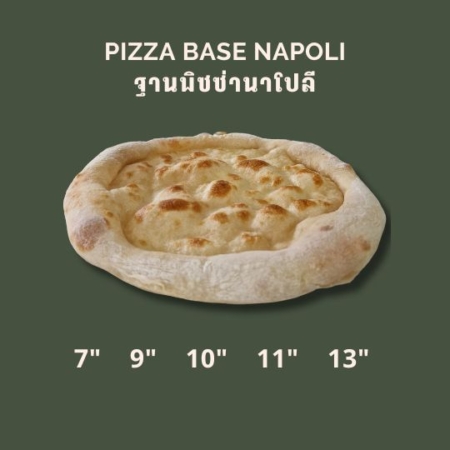
The base we make for this bake is the Pizza Base Napoli — naturally fermented, par-baked, 10 or 11 inches, built to take ninety seconds of direct stone contact without drying out.
If you want to compare styles side by side, the Napoli-Roma Trial Box puts the Neapolitan and the thin Roman base in the same delivery for 300 ฿. And if Neapolitan is not the only thing you want on the menu, the same oven bakes Pinsa Romana, Pizza in Teglia, Focaccia and even a chocolate pizza base for dessert.
- Display 46 Products per page
-
 Select options This product has multiple variants. The options may be chosen on the product page
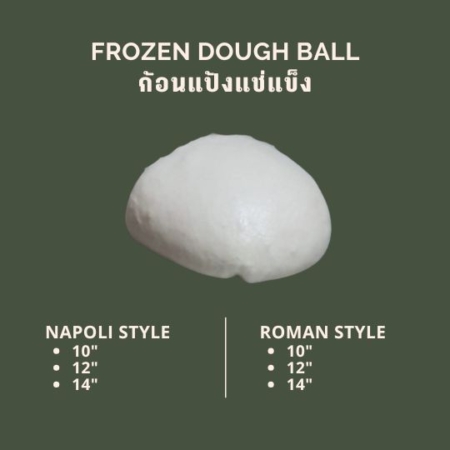
DOUGH BALLS
Price range: ฿580.00 through ฿8,250.00 + vat -
 Select options This product has multiple variants. The options may be chosen on the product page
Pizza Base Napoli
Price range: ฿800.00 through ฿4,000.00 + vat -
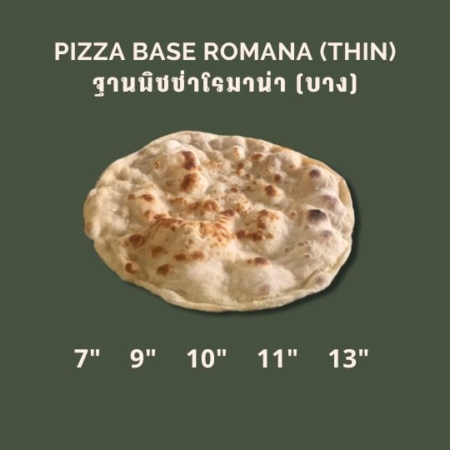 Select options This product has multiple variants. The options may be chosen on the product page
Pizza base Romana
Price range: ฿700.00 through ฿3,500.00 + vat -
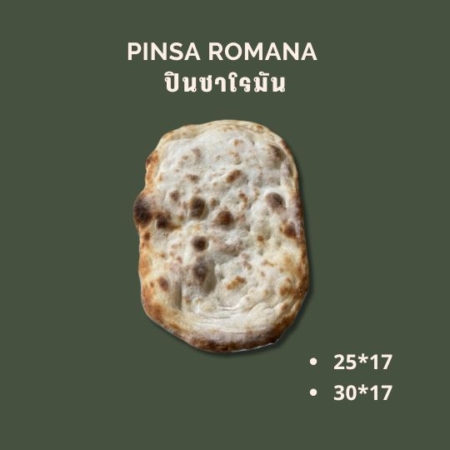 Select options This product has multiple variants. The options may be chosen on the product page
Pinsa Romana
Price range: ฿1,200.00 through ฿3,500.00 + vat -
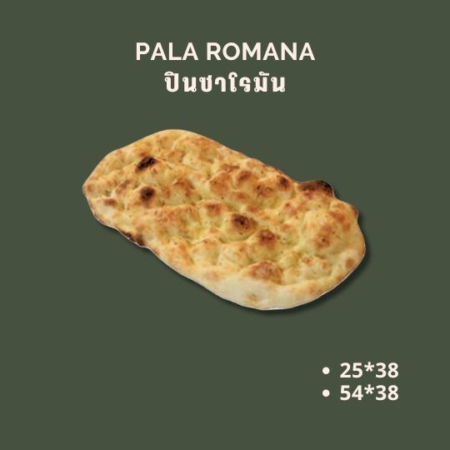 Select options This product has multiple variants. The options may be chosen on the product page
Pala Romana
฿2,500.00 + vat -
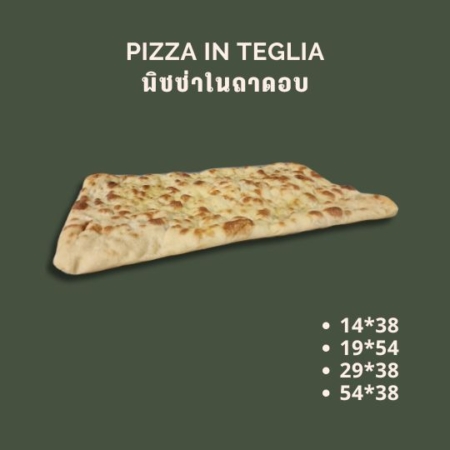 Select options This product has multiple variants. The options may be chosen on the product page
Pizza in Teglia
Price range: ฿1,500.00 through ฿3,900.00 + vat -
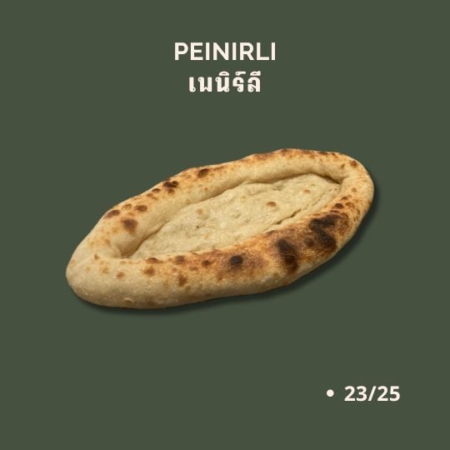 Select options This product has multiple variants. The options may be chosen on the product page
Peinirli
Price range: ฿1,000.00 through ฿2,500.00 + vat -
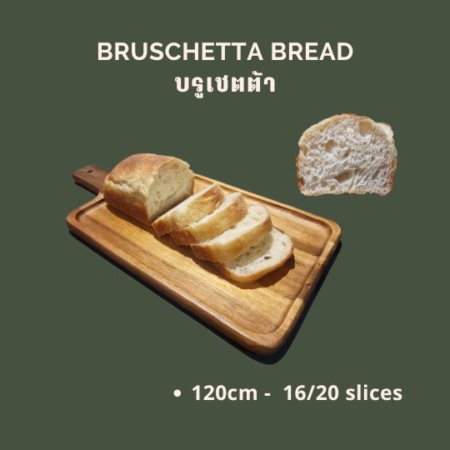 Select options This product has multiple variants. The options may be chosen on the product page
Bruschetta
Price range: ฿1,725.00 through ฿3,335.00 + vat -
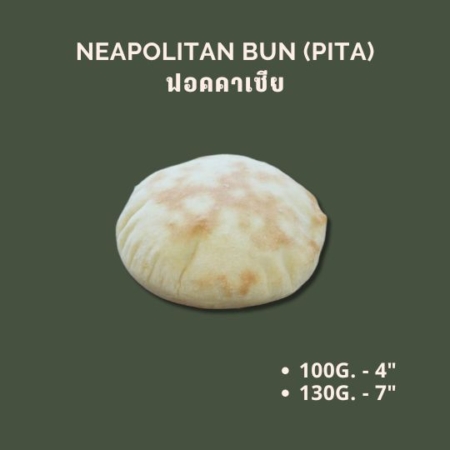 Select options This product has multiple variants. The options may be chosen on the product page
Neapolitan Bun
Price range: ฿600.00 through ฿1,250.00 + vat -
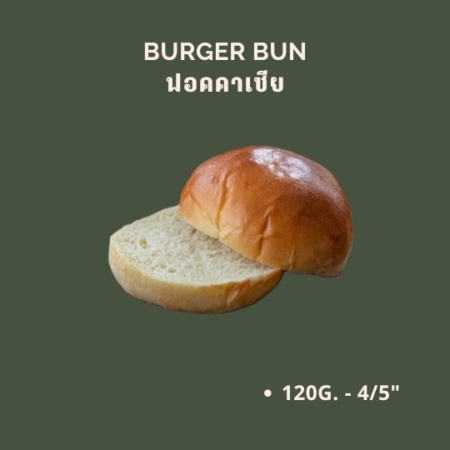 Select options This product has multiple variants. The options may be chosen on the product page
Burger Bun
Price range: ฿750.00 through ฿1,250.00 + vat -
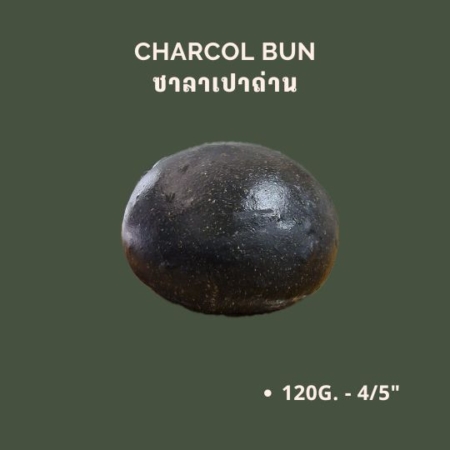 Select options This product has multiple variants. The options may be chosen on the product page
Black Burger Bun
Price range: ฿900.00 through ฿1,500.00 + vat -
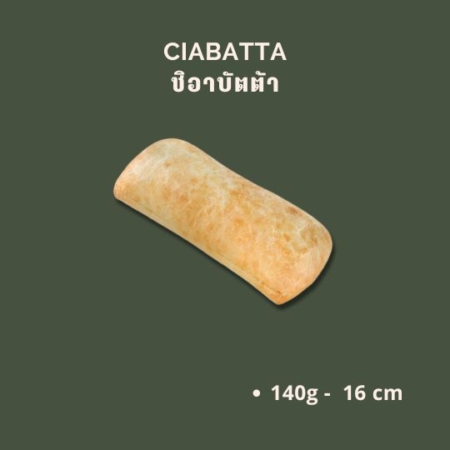 Select options This product has multiple variants. The options may be chosen on the product page
Ciabatta
Price range: ฿500.00 through ฿1,250.00 + vat -
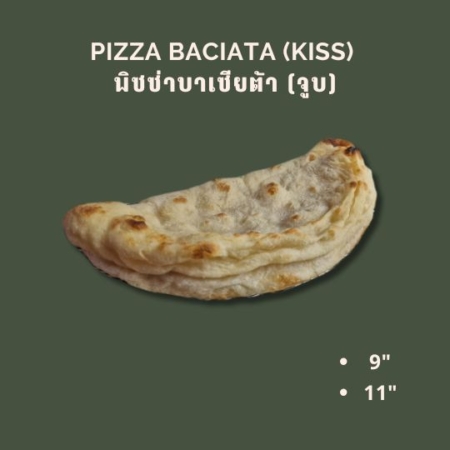 Select options This product has multiple variants. The options may be chosen on the product page
Pizza Baciata
Price range: ฿1,000.00 through ฿3,000.00 + vat -
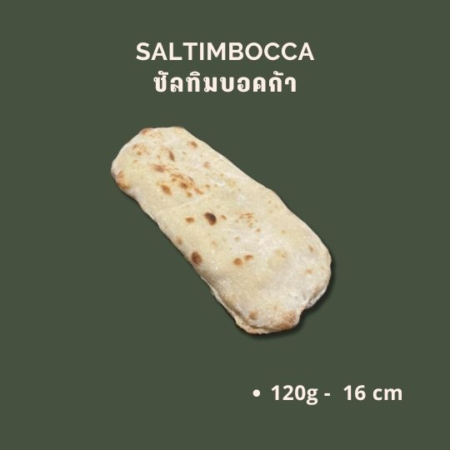 Select options This product has multiple variants. The options may be chosen on the product page
Saltimbocca
Price range: ฿500.00 through ฿1,250.00 + vat -
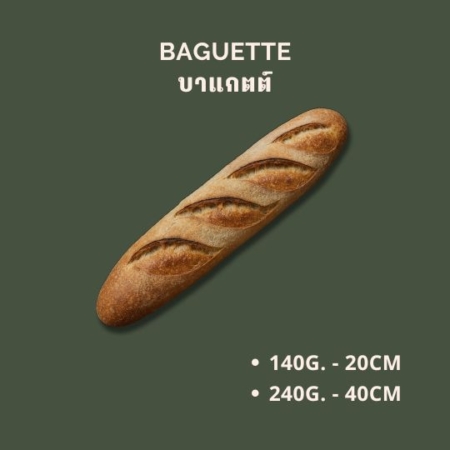 Select options This product has multiple variants. The options may be chosen on the product page
Baguette
Price range: ฿700.00 through ฿2,400.00 + vat -
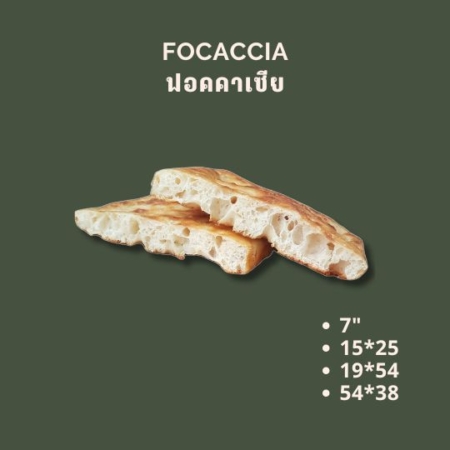 Select options This product has multiple variants. The options may be chosen on the product page
Focaccia
Price range: ฿1,600.00 through ฿5,600.00 + vat -
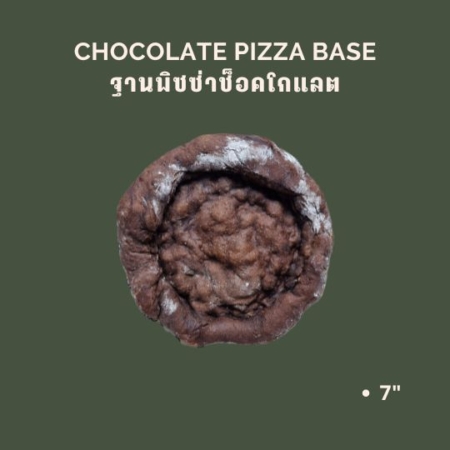 Select options This product has multiple variants. The options may be chosen on the product page
Pizza Base Chocolate
Price range: ฿1,500.00 through ฿7,500.00 + vat


FIND OUT -TEST BOXES